All movement standards

Where a rep starts and ends

Positions

The defined body positions that rep standards are written in terms of — where a rep begins, what it passes through, and where it ends.

Body Parts · Rules · Variations

POSITION

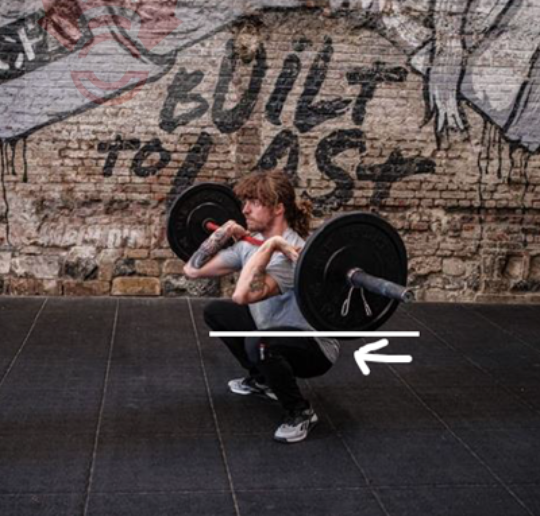
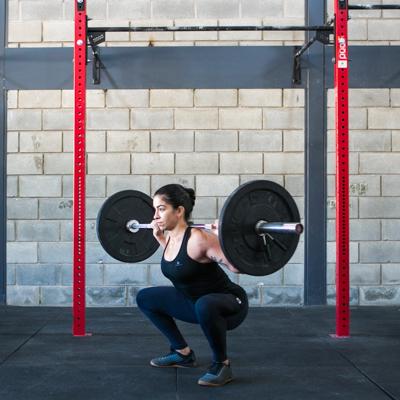
BOTTOM OF SQUAT

Standing free (2-foot version) or 1 foot on the ground.

  • Achieving a full squat, with the crease of the hip below the plane of the top of the knee for each active leg.
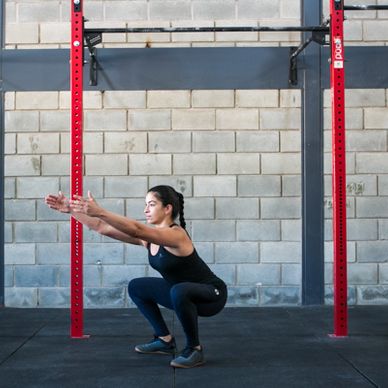
AIR-SQUAT_side_bottom_002.jpgimage.pngFRONT-SQUAT_three-quarter_bottom_021.jpgIMG_7517.jpg
POSITION

DEADLIFT LOCKOUT

Standing tall position is achieved.

  • Object is supported by the hands, arms oriented downward from the shoulders.
  • Elbows fully extended.
  • Shoulders behind the vertical plane of the object if object is kept in front of body.
DEADLIFT_side_lockout_051.jpg
POSITION

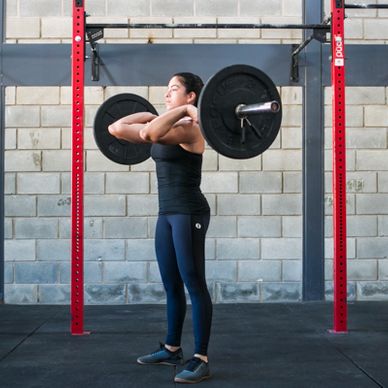
FRONT RACK LOCKOUT

Standing tall position is achieved.

  • Object in contact with the athlete’s shoulder(s).
  • Elbow(s) clearly in front of the center of mass of the object.
  • Fist(s) below chin.
FRONT-SQUAT_side_setup_004.jpg
POSITION

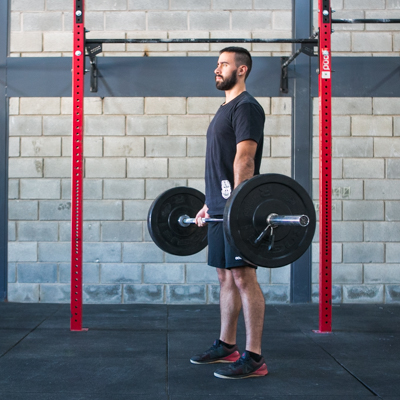
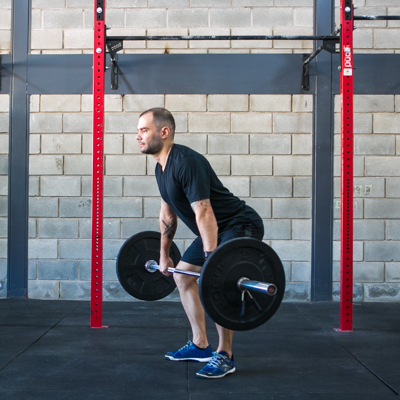
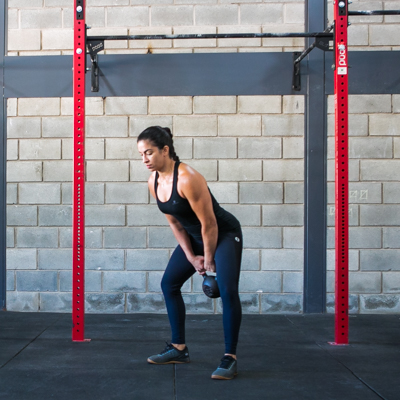
HANG POSITION

Standing free.

  • Object off ground (not touching ground with any part of the object).
  • Object is supported by the hands, arms oriented downward from the shoulders.
  • Elbows extended.
  • Shoulders in front of the vertical plane, placing object slightly lower than a deadlift lockout.
clean, barbell hang (bottom) (3).JPGAMERICAN-KETTLEBELL-SWING_three-quarter_setup_088.jpg
POSITION

INVERTED LOCKOUT

  • Inverted (upside - down) position.
  • Only the ventral part of the hands in contact with the ground.
  • Full extension of the hips, knees and elbows.
POSITION

L POSITION

“L”-shape 90-degree with ground or starting object.

  • Forming an L-position horizontal legs, and heels at or above glutes.
POSITION

OBJECT ON GROUND

BARBELL

  • Both bumpers in contact with the ground at the same time.

DUMBBELL

  • Both sides/heads on a single dumbbell in contact with the ground at the same time.
  • When using two dumbbells, at least on side/head of each dumbbell need to make contact with the ground.

KETTLEBELL

  • Any part of the bottom circle of a kettlebell in contact with the ground.

BALL

  • Any part of the ball in contact with the ground.

ODD OBJECT

  • Any part of the object in contact with the ground.

WORM

  • Full worm in contact with the ground, or if held by hands, the hands are in contact with the ground.
POSITION

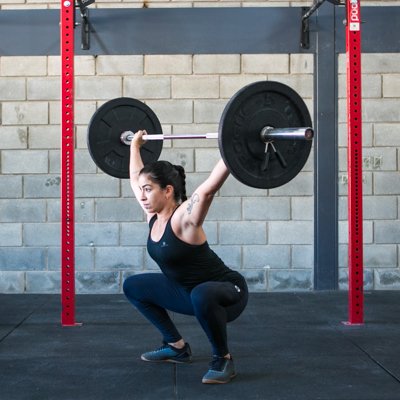
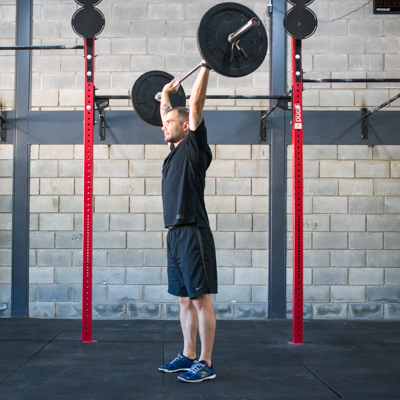
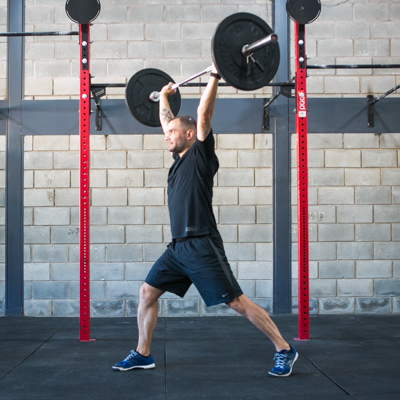
OVERHEAD LOCKOUT

  • Standing tall position is achieved
  • Object is overhead, arm(s) vertical.
  • Full extension of elbows.
  • For 1-arm versions, the supporting arm is vertical.
OVERHEAD-SQUAT_side_lockout_047.jpg
POSITION

PLANK LOCKOUT

Resting on the ventral part of the hands and toes.

  • No other body parts are in contact with the ground.
  • Arms and legs fully extended.
  • Shoulders, hips, and feet in alignment.
  • Toes no greater than shoulder width apart.
POSITION

POWER POSITION

Standing free

  • Avoiding bottom-of-squat, this includes:
  • a partial squat
  • a full extension (also known as "muscle position")
  • a split position
POSITION

PRONE

Generally flat on the ground, not arching.

  • Resting on the ventral part of the hands.
  • Hands positioned behind the line made by the chin.
  • Chest and toes in contact with the ground.
  • Leg, knee, face or any other body-part contact is permitted, but no required.
POSITION

SEATED

Gluteus in contact with ground or starting object.

POSITION

SPLIT

Standing free.

  • The entire front foot must be placed further in front than the toes of the back foot.
  • Both feet must move away from each other.
IMG_7574.JPG
POSITION

STANDING FREE

  • Both feet in contact with the ground or object.
RelatedKneesHip
AIR-SQUAT_three-quarter_setup_017.jpg
POSITION

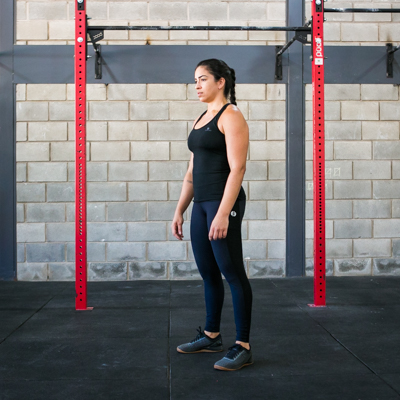
STANDING TALL

  • Standing free position is achieved
  • Full extension of the hips and knees
  • Chest up, straight back
  • Vertical alignment of the shoulders, hips, knees and ankles
AIR-SQUAT_three-quarter_setup_017.jpg
POSITION

VERTICAL HANG

Hanging vertically from a suspended bar or rings using both hands.
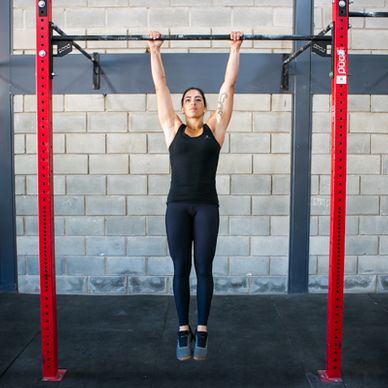
  • Full extension of elbows.
  • The shoulder angle is open or rearward if the frontal plane.
PULL-UP_front_setup_011.jpg
POSITION

VERTICAL SUPPORT

  • Fully supported on hands, shoulders above equipment (typically horizontal bar or rings).
  • Elbows fully extended.
  • Chest up, straight back.
  • Bodyweight is not supported with any body parts other than the hands (eg resting trunk on the bar)